Your game plan for shoppers, streamers, and scrollers
The global media landscape
Written by:
Shauna Moran
Insight Lead
For marketers and research professionals, the ever-changing media landscape can be both inspiring and overwhelming. They don’t just need to understand it, they need to use their know-how to point decision-makers in the right direction and make the most of their budget. This will be critical in the months ahead, now that business priorities have generally shifted from growth to profit.
Many brands share the same challenges: they're trying to reach as many people as possible, select channels with the best ROI, engage niche fanbases on a more personal level, adapt their creative for different platforms, and leave room to experiment on up-and-coming spaces. They’ll find tips on all this, and more, in our report.
Key insights
Broadcast TV still commands the greatest share of total TV time
It’s true: broadcast TV has less reach than it used to, and free ad-supported streaming TV (FAST) models are stepping up. But it’s still ahead of streaming sites for average time spent watching it, is a trusted advertising channel, and a great means of reaching certain audiences.
AI platforms are one of the top three ways Gen Z search online
The only generation to pick social media over search engines when doing product research, Gen Z clearly like personalized results. Brands should future-proof their strategies by investing in AI, especially as people find more reasons to use it.
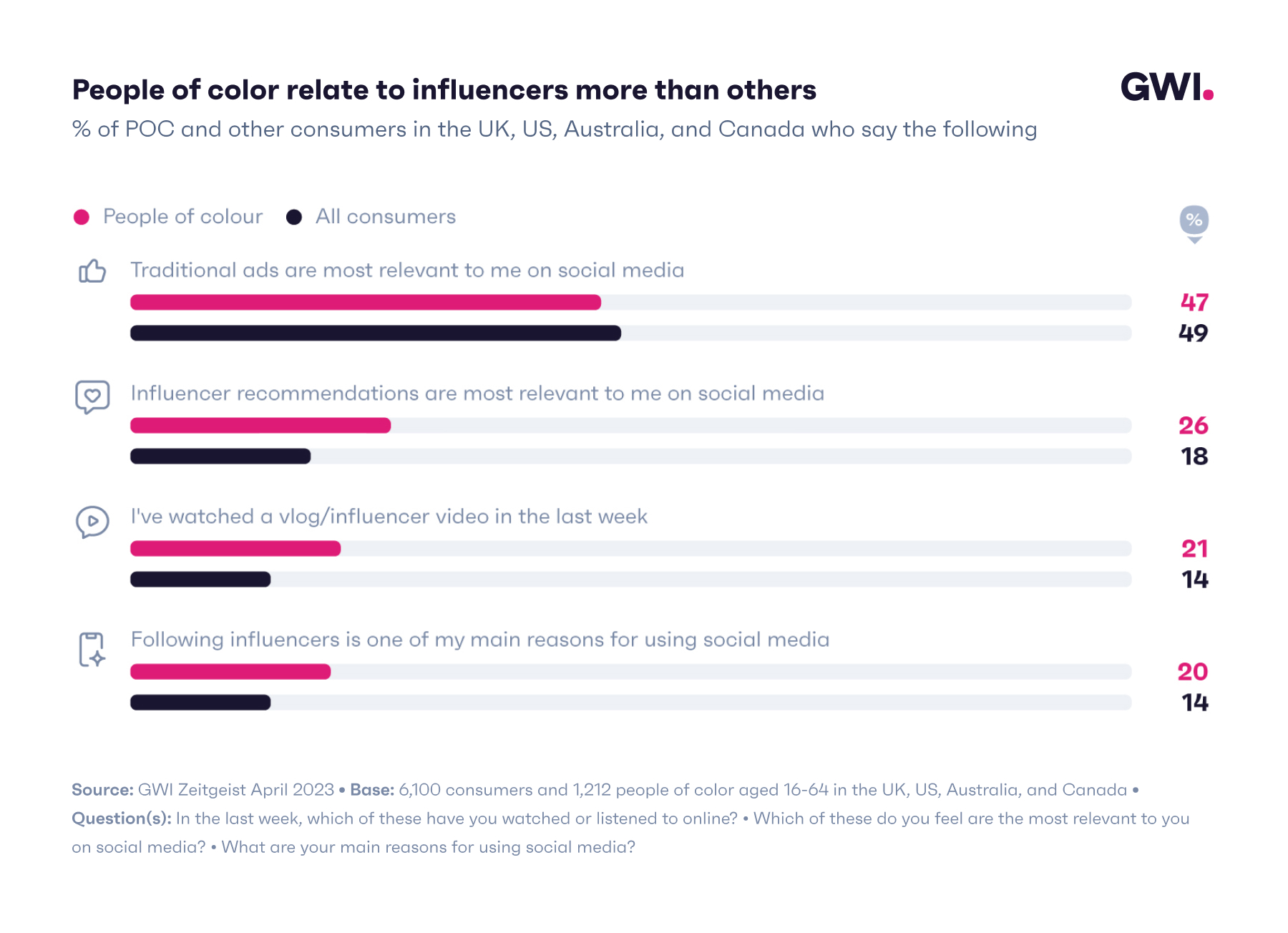
POC are more receptive to influencers, and less to ads, than average
People of color (POC) are less likely to say traditional ads are relevant to them, which suggests they don’t adequately reflect their experiences just yet. Influencer partnerships can help bridge this gap, and targeted marketing campaigns can be informed by them.
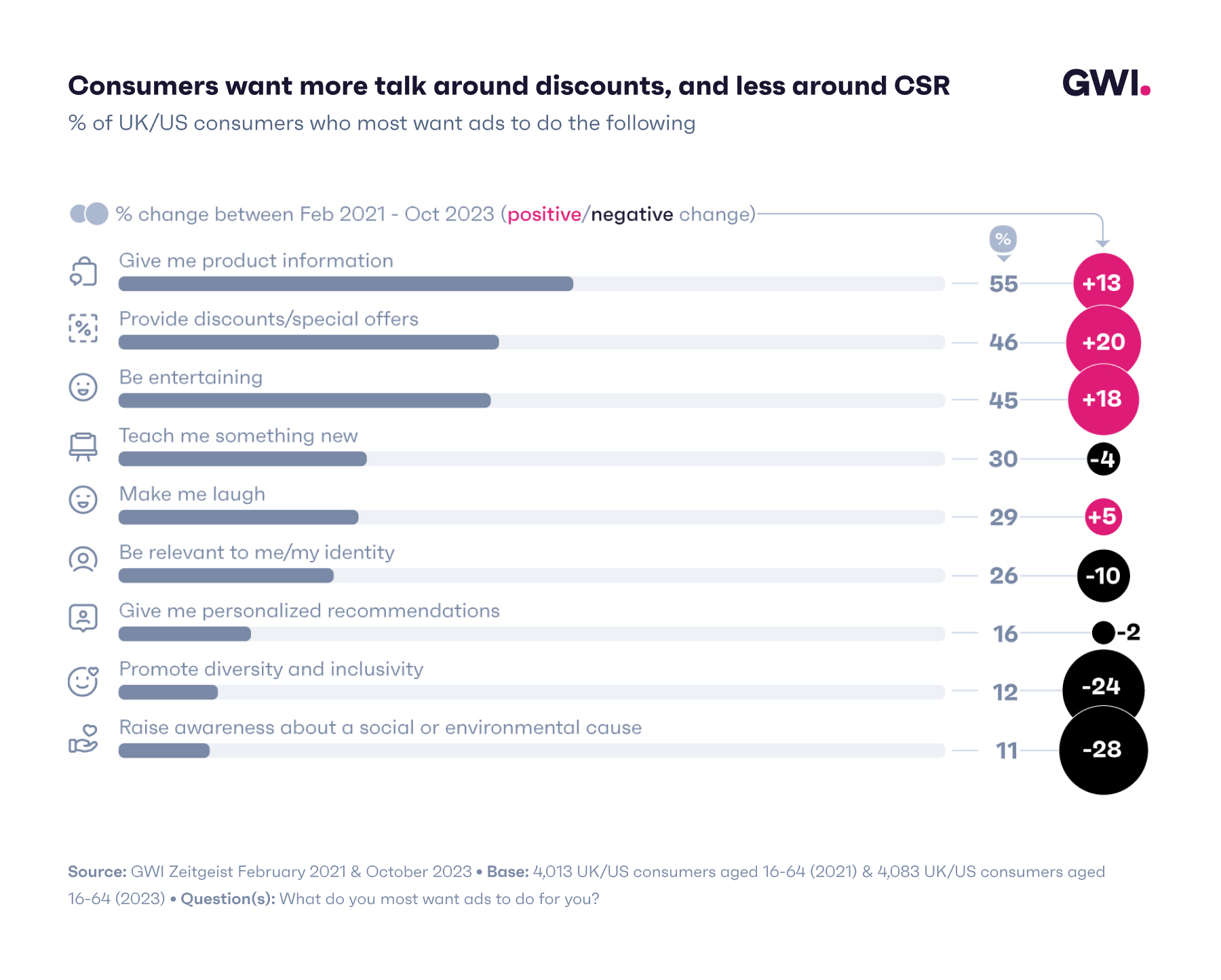
There’s been a rise in people wanting ads to include discounts
With money tighter, more people want ads to offer discounts. Meanwhile, consumers have grown less responsive to those featuring CSR efforts. Purpose-driven campaigns are the best option for some brands, but that decision should be informed by audience data.
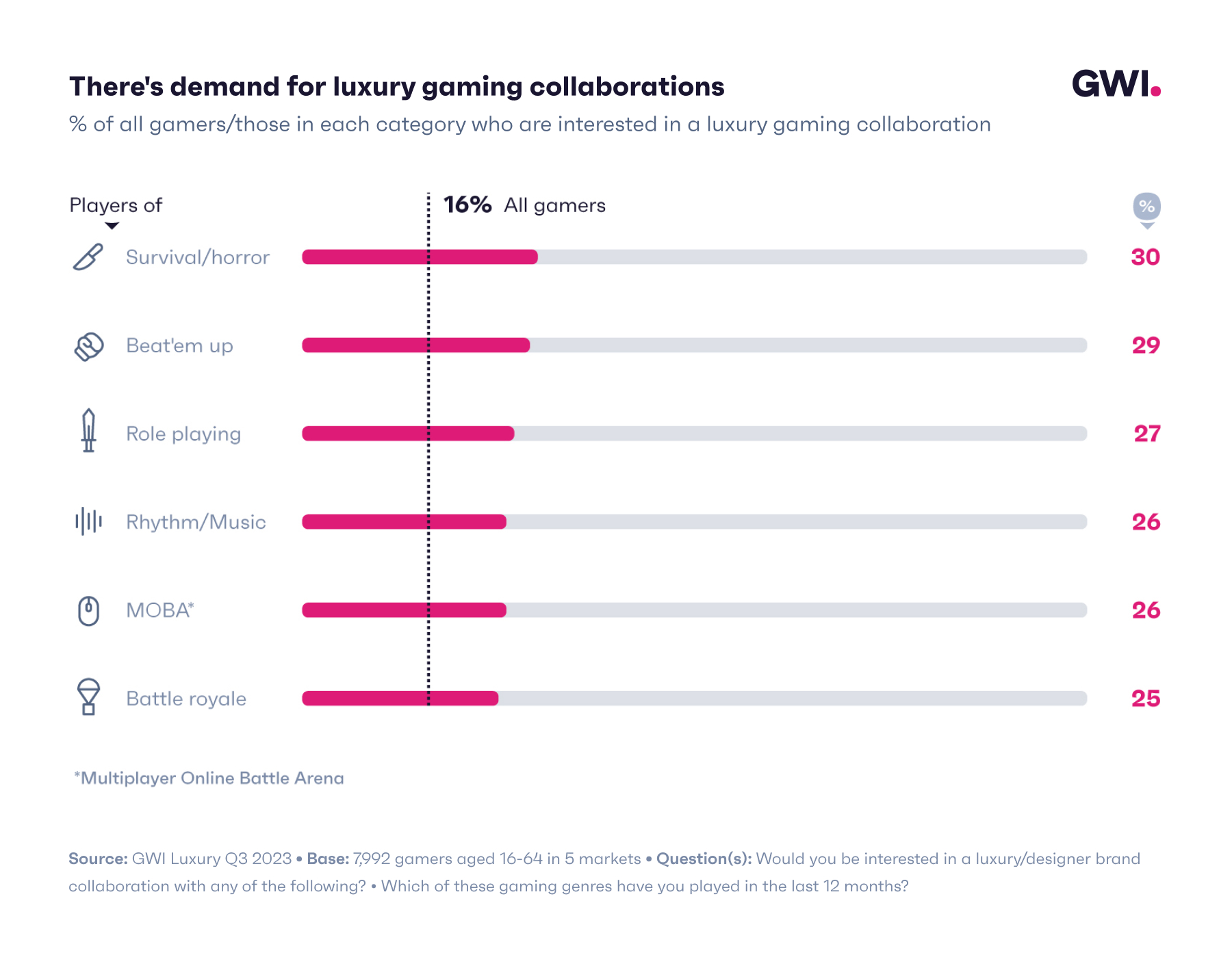
Survival/horror players are most excited about gaming luxury collabs
Luxury and gaming partnerships are a winning combo. Whether it's virtual fashion items, esports merchandise, or gaming accessories, there's demand for it - especially among certain types of gamers.
Today’s top media trends
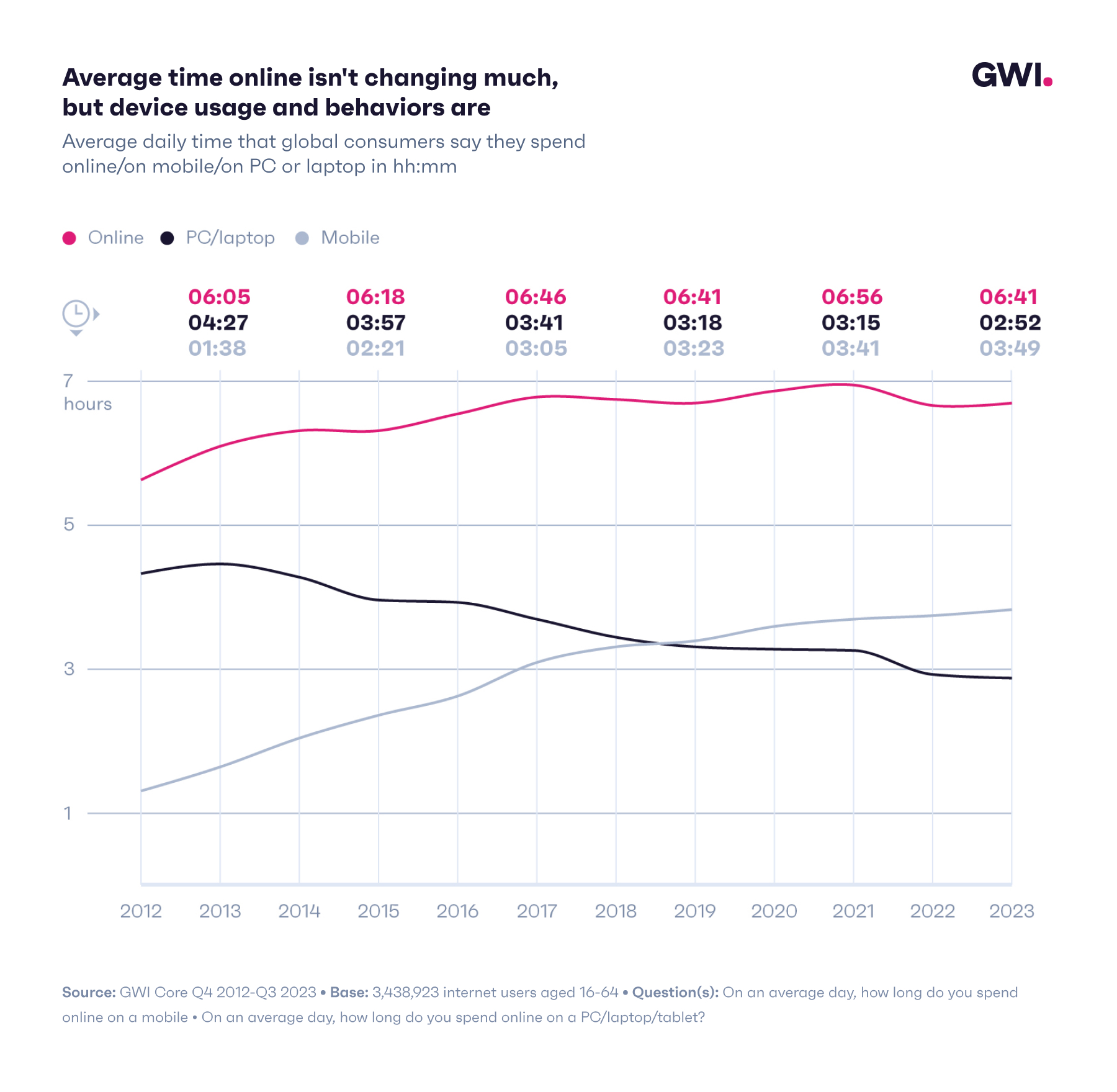
Up until 2016, the headline was: consumers are spending more and more time online. We didn’t know where the ceiling was.
We soon found it. Lockdowns and their aftermath were responsible for new peaks, but they were a one-off. Now, business professionals are returning to the office, new technology like AI has joined the long list of platforms we use regularly, and tighter budgets have pushed people to rethink subscriptions.
There’s been slight drops in internet usage, but generally it’s pretty stable and likely to stay that way. So, it’s better to move away from the amount of time we spend online and start focusing on the what, how, and why.
Average time online isn't changing much, but device usage and behaviors are
Average daily time that global consumers say they spend online/on mobile/on PC or laptop in hh:mm
Source: GWI Core Q4 2012-Q3 2023 | Base: 3,438,923 internet users aged 16-64
Smart products are branching out
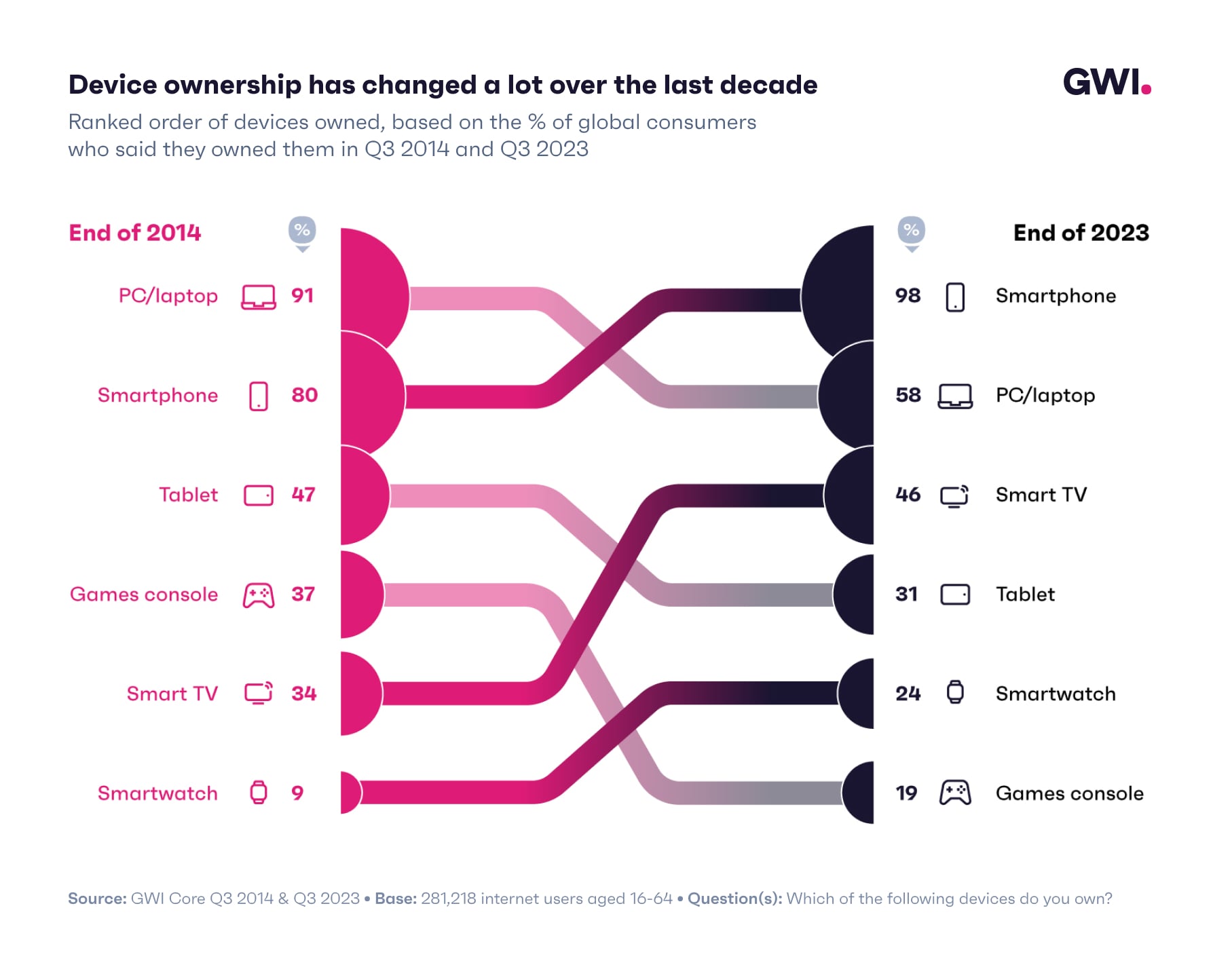
Smartphones dominate today’s media landscape, which has had a domino effect. Their intelligent features made smart tech more mainstream, and devices like watches and thermostats continue to rely on their apps.
Device ownership has changed a lot over the last decade
Ranked order of devices owned, based on the % of global consumers who said they owned them in Q3 2014 and Q3 2023
Source: GWI Core Q3 2014 & Q3 2023 | Base: 281,218 internet users aged 16-64
As a result, we’ve seen some big shifts in product ownership. Smart TVs overtook tablets in 2018, with smartwatches speeding past game consoles in 2022.
Plus, we’re keeping a watchful eye on these markets as they evolve. Back in 2015, 36% of US/UK Apple Watch owners were female; today, it’s 57%, and their use cases are expanding. Health/fitness tracking is still the number one reason for having them but among owners of brands like Sony and G-Shock, entertainment, browsing, or communication rank top. In the future, consumers might start leaning more heavily on an even smaller screen for everyday scrolling, which could mean extra focus on strong visuals in ads, and less on text and click metrics.
Smart home products are also branching out. The number of people saying they own one has risen by 15% in the last two years, with growth being boosted by groups like parents with young children (+22%) or divorced/widowed consumers (+27%), which means the list of potential marketing possibilities is ballooning.
Broadcast TV is still the main character
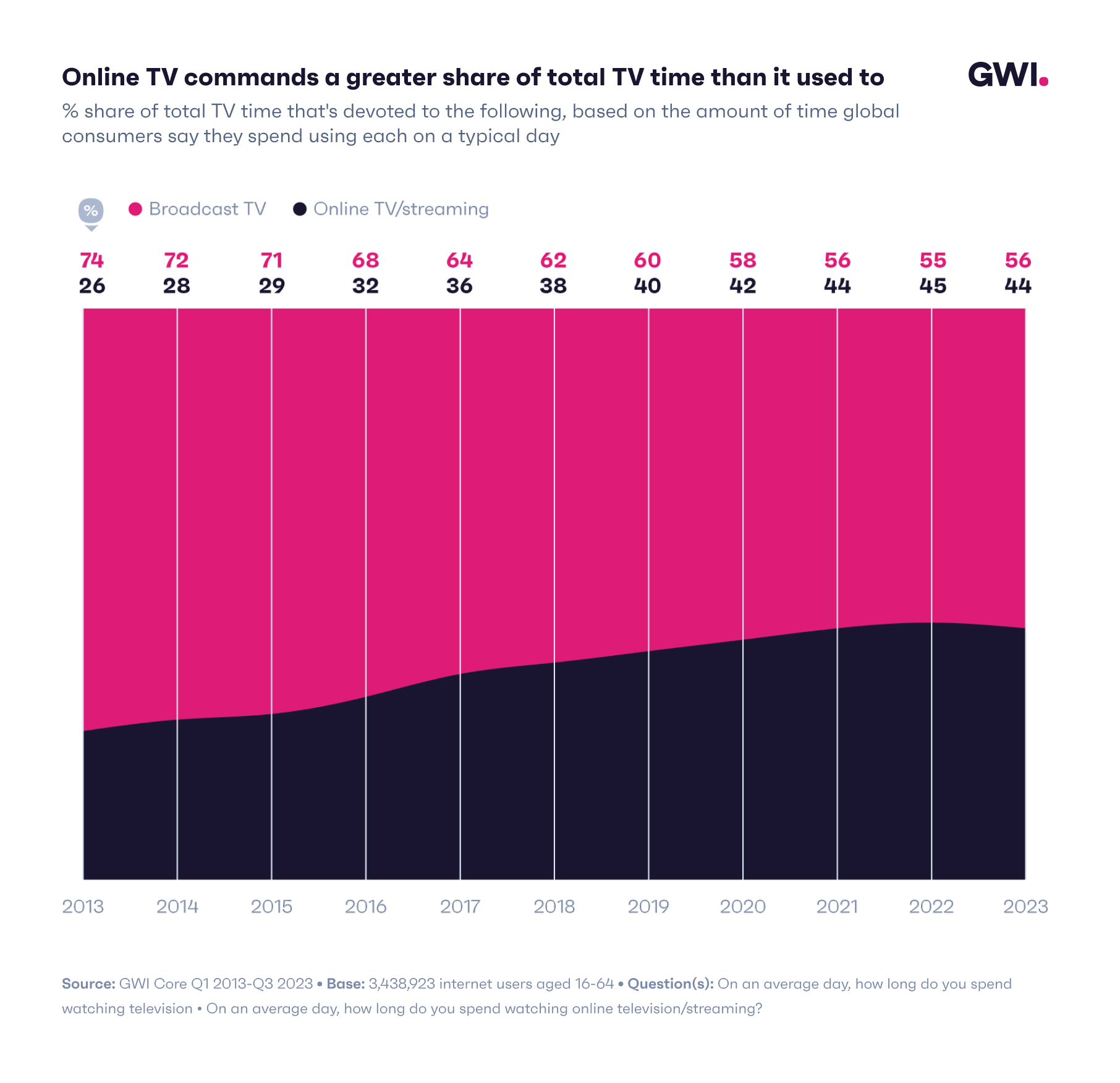
You might have read headlines that broadcast TV has less reach than it used to, and we can confirm they’re true. Late 2023 was the very first time that 1 in 10 internet users said they don’t watch any broadcast TV on a usual day.
Though, headlines tend to focus on what’s changing, rather than on what’s staying the same – which is also important. Broadcast TV still commands a greater share of total TV time than streaming, with broadcast shows like "The Traitors" and the 2024 Super Bowl smashing all kinds of live viewership records. Groups like baby product/pet food buyers, cruise fans, and spirit drinkers are heavy TV watchers, so it’s also a great channel to explore if you have a specific audience in mind.
Online TV commands a greater share of total TV time than it used to
% share of total TV time that's devoted to the following, based on the amount of time global consumers say they spend using each on a typical day
Source: GWI Core Q1 2013-Q3 2023 | Base: 3,438,923 internet users aged 16-64
Came to scroll, stayed for the entertainment
At the top of the leaderboard, social platforms beat all other media types for the daily time people spend using them – for the average consumer, this is 2 hours and 23 minutes. And the fabric of this space is changing.
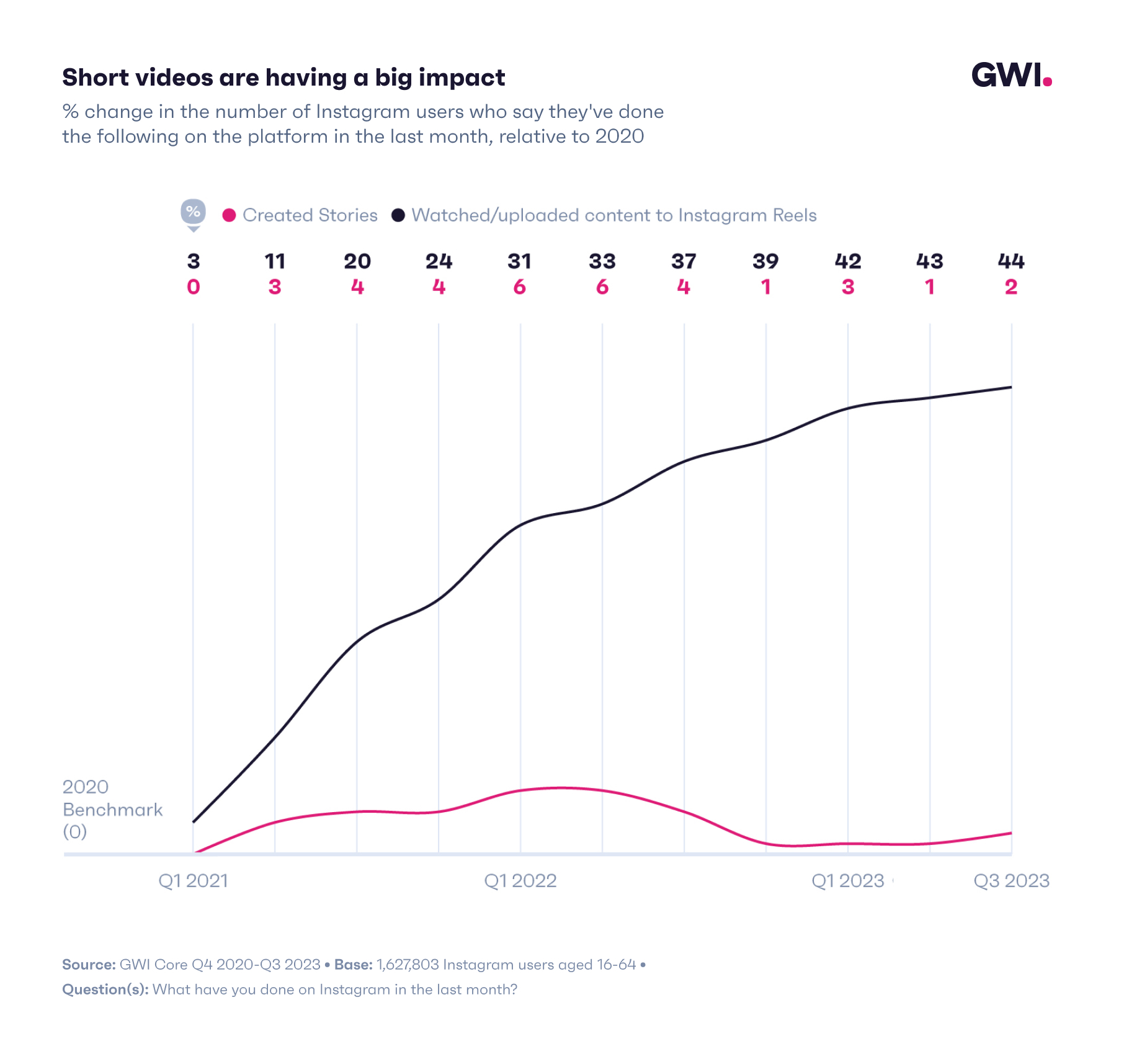
Short videos are having a big impact
% change in the number of Instagram users who say they've done the following on the platform in the last month, relative to 2020
Source: GWI Core Q4 2020-Q3 2023 | Base: 1,627,803 Instagram users aged 16-64
What’s happening on Instagram is emblematic of a wider shift: people are using social media more for entertainment, and relatively less for personal sharing. While creating stories has stayed fairly stable on Instagram, Reels is where the momentum is.
Short-form video is ultimately a great playground for creativity, and an opportunity to drive powerful brand engagement. Half of those who view short clips on social media say they "like" or "comment" on them more than long-form content, and 62% say they share them with family/friends more.
Podcasting has matured. What’s next?
Every medium has its golden age, where growth is rapid, investments are high, or competition is more scarce. Then, the hype dies down and formats enter their next phase. That’s what’s happened with podcasts.
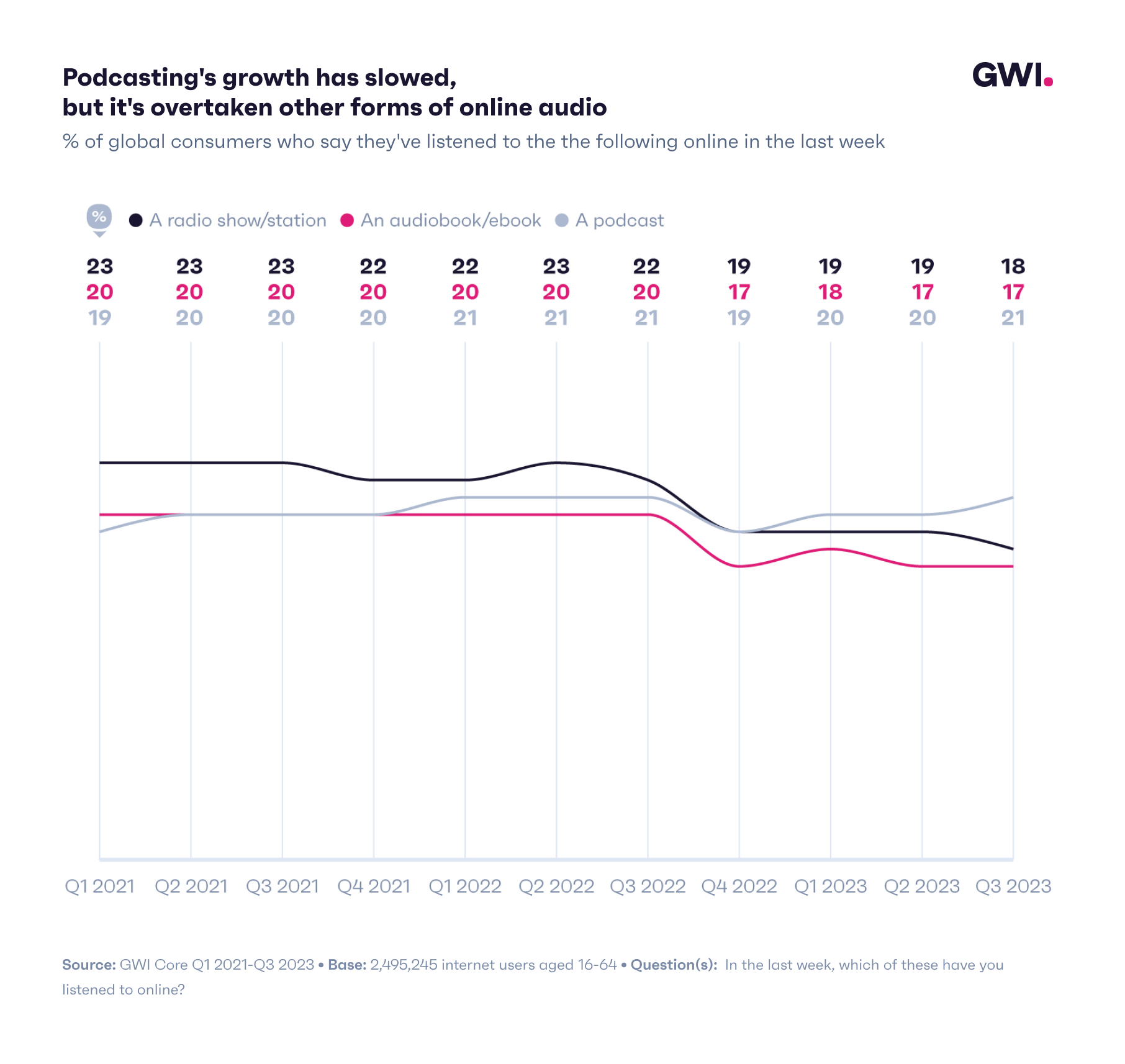
Still, progress has been impressive, especially when we compare podcasting to long-standing forms of online audio; and advertisers now want to know which audiences they can speak to using it, and how well.
Podcasting's growth has slowed, but it's overtaken other forms of online audio
% of global consumers who say they've listened to the the following online in the last week
Source: GWI Core Q1 2021-Q3 2023 | Base: 2,495,245 internet users aged 16-64
Understanding the battle for consumers' attention
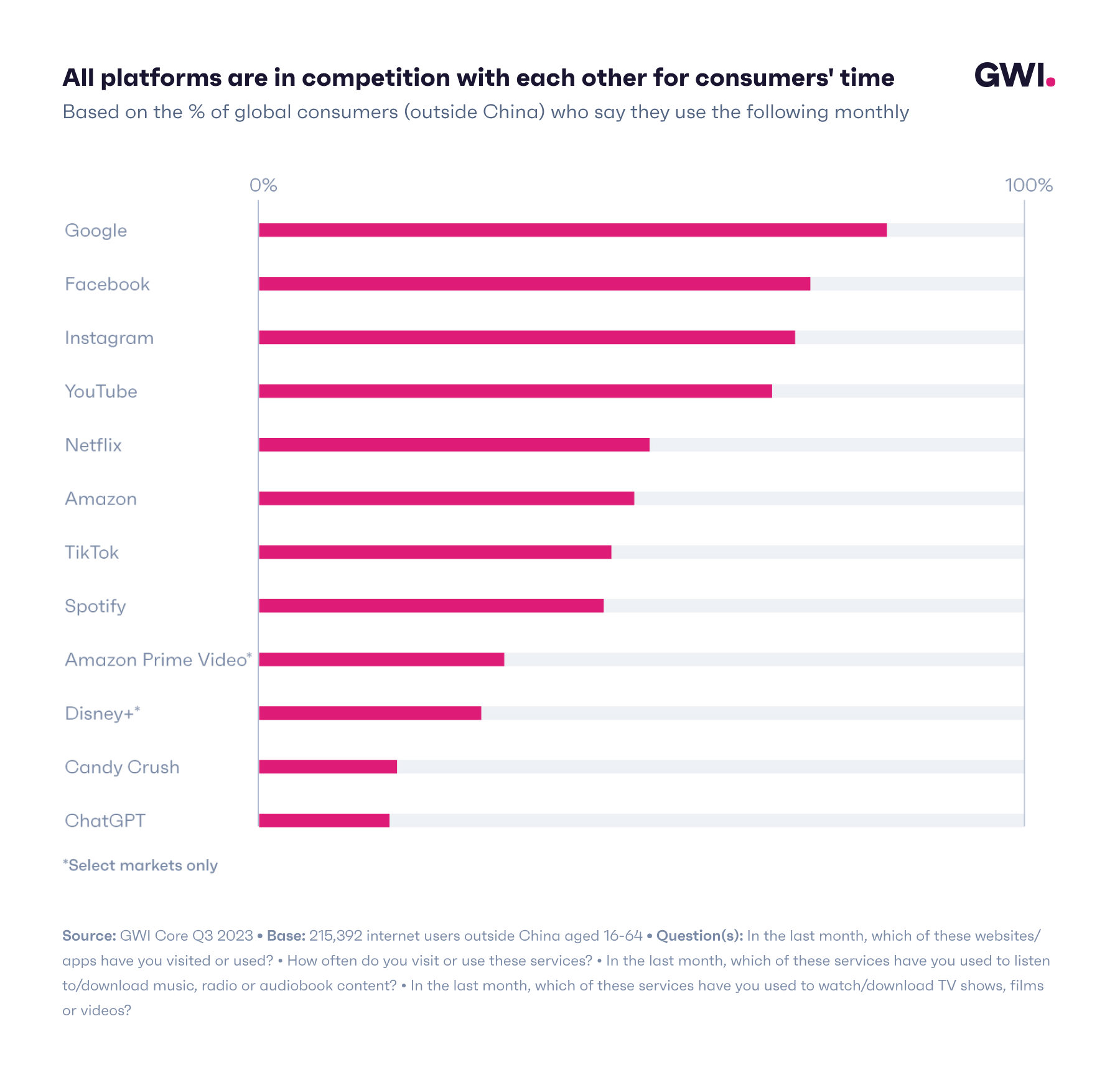
All platforms are in competition with each other for consumers' time
Based on the % of global consumers (outside China) who say they use the following monthly
Source: GWI Core Q3 2023 | Base: 215,392 internet users outside China aged 16-64
Your customers might be searching for you on AI chatbots
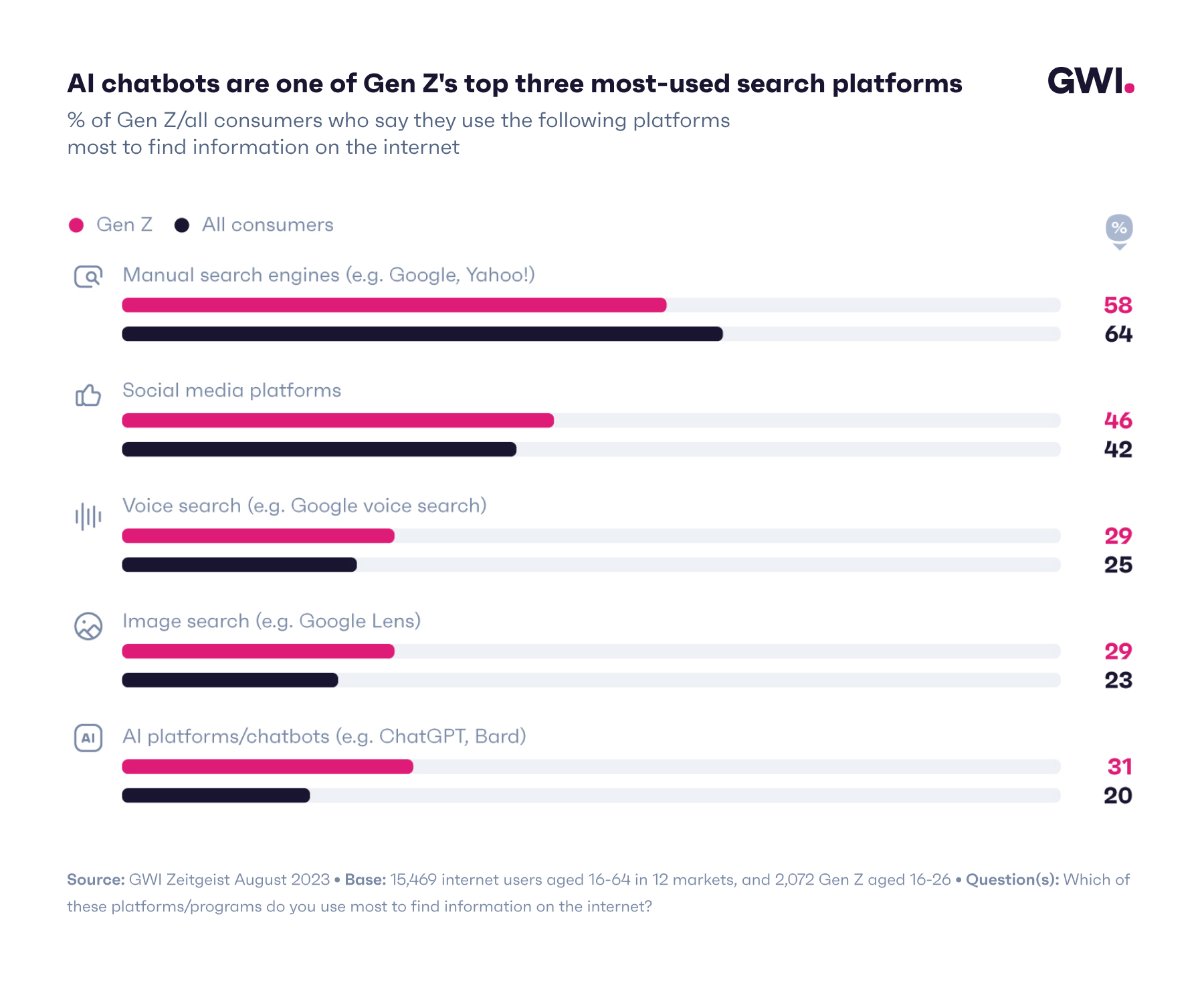
If you read the full list of platforms above, you’ll have spotted ChatGPT. Having achieved in one year what took voice and image search a decade, it’s now one of the top three ways Gen Z search for information.
As the only generation to pick social platforms over search engines for shopping-related research, Gen Z clearly like customized results, which explains their enthusiasm for AI. Plus, with over a fifth of 12-15 year-olds saying they mainly use social media to find things to buy, it’s likely Gen Alpha will have similar search preferences as they age. Brands should future-proof their strategies to include AI, as even if people don’t trust everything they see on chatbots, they’re finding more reasons to spend time on them.
AI chatbots are one of Gen Z's top three most-used search platforms
% of Gen Z/all consumers who say they use the following platforms most to find information on the internet
Source: GWI Zeitgeist August 2023 | Base: 15,469 internet users aged 16-64 in 12 markets, and 2,072 Gen Z aged 16-26
From click to cart, ecommerce is evolving
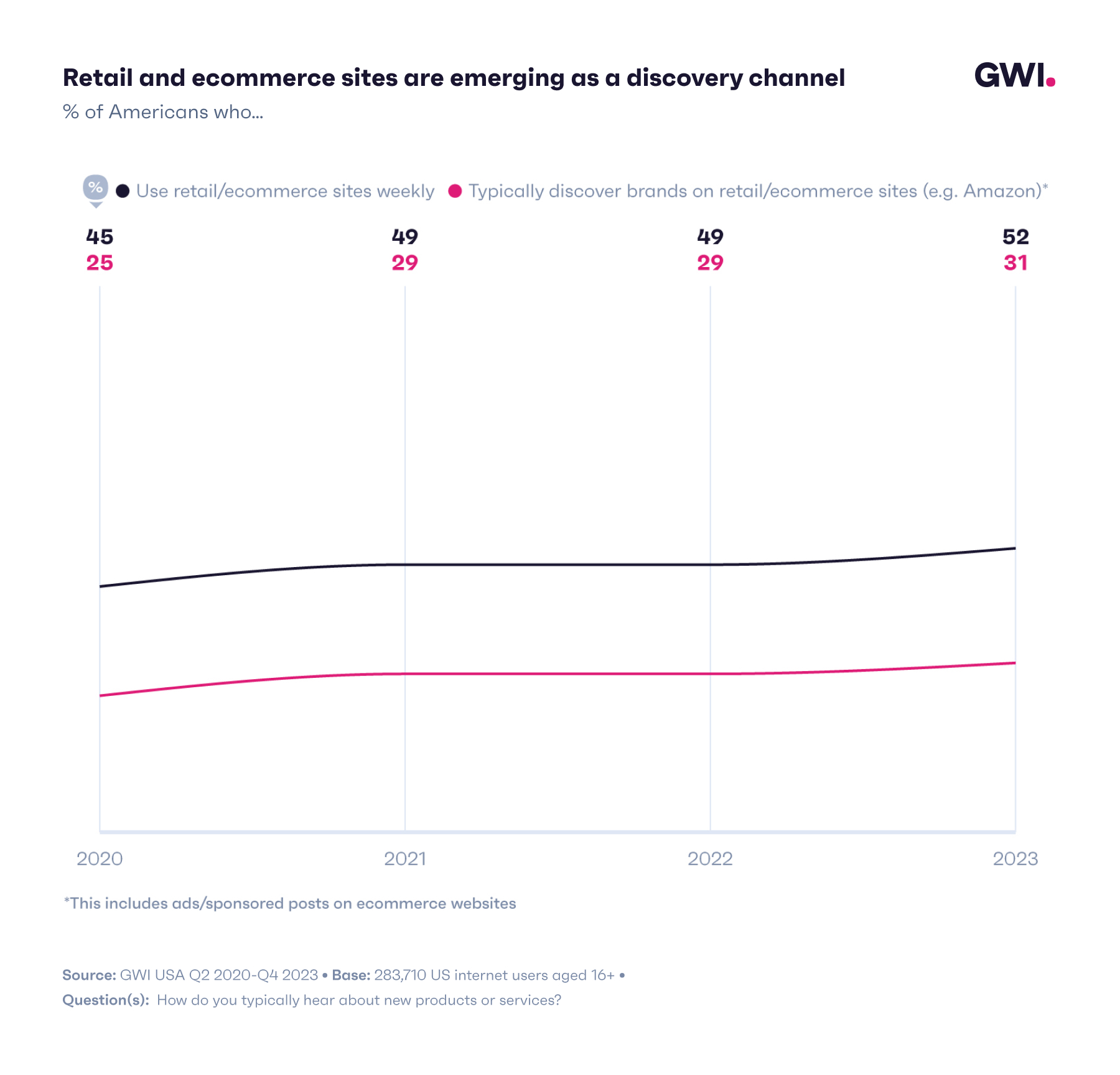
Online shopping is also eating up consumers’ attention. Ecommerce has grown in the US over the last few years, and retailers have a wealth of privacy-compliant data on their customers, which is one of the reasons why retail media networks have become popular among advertisers.
Retail and ecommerce sites are emerging as a discovery channel
% of Americans who…
Source: GWI USA Q2 2020-Q4 2023 | Base: 283,710 US internet users aged 16+
VR devices are catching people’s eye
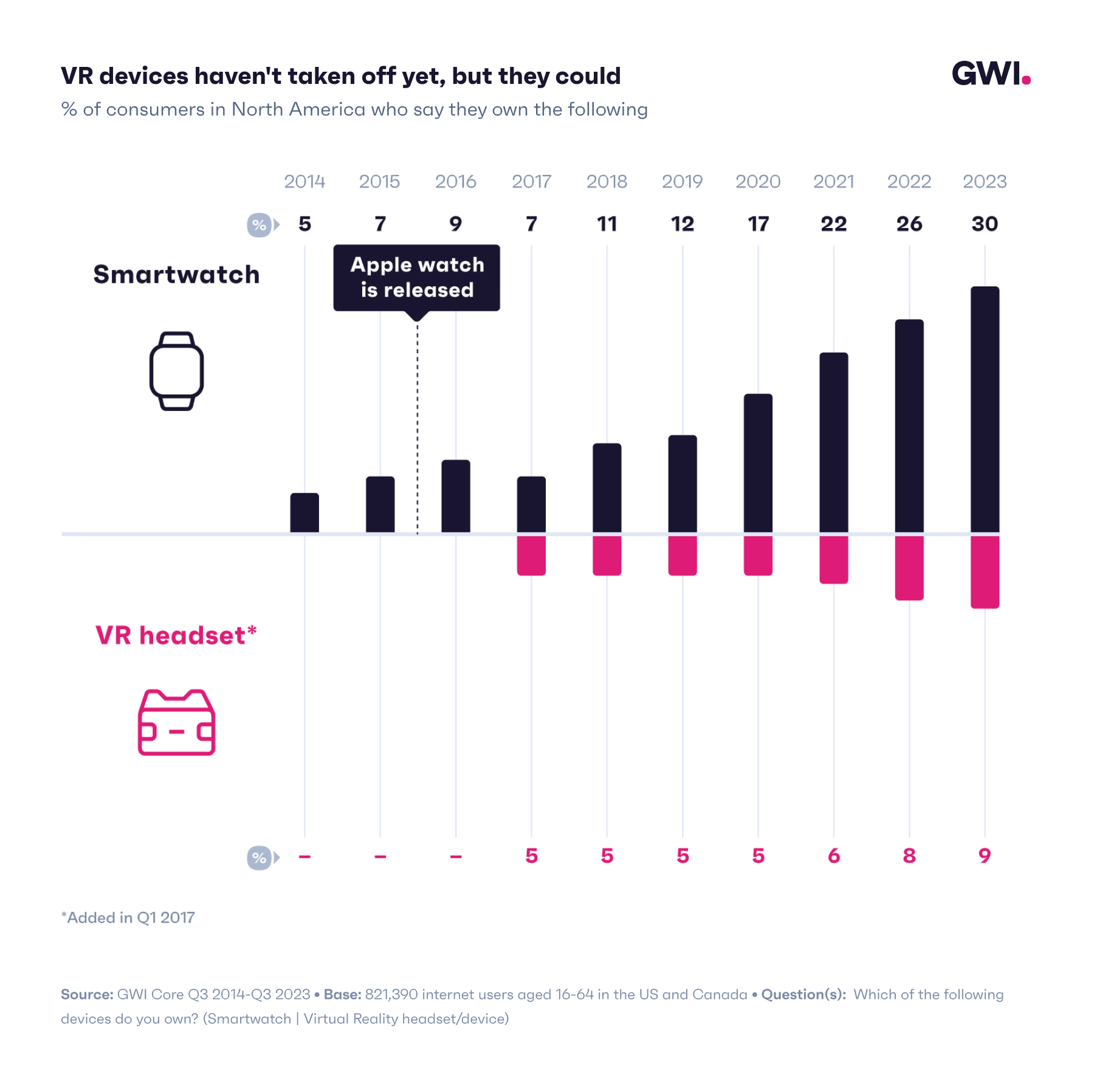
Apple’s Vision Pro represents its first new hardware release since the Apple Watch. So, we looked at the impact Apple had on the smartwatch market, to consider what it might do for VR devices.
VR devices haven't taken off yet, but they could
% of consumers in North America who say they own the following
Source: GWI Core Q3 2014-Q3 2023 | Base: 821,390 internet users aged 16-64 in the US and Canada
Driving ROI with the right channels
Because consumers’ attention is split in a myriad of ways, it can be easy for marketers to feel like they’re not coming at them from enough angles. While new shiny platforms always seem to offer something that others can't, many advertisers are working with fewer funds. 1 in 5 professionals responsible for marketing or digital media/content say that budget cuts are one of the biggest challenges their team or company is facing right now, and management consulting agency Gartner suggests that “the era of more” has finally come to an end.
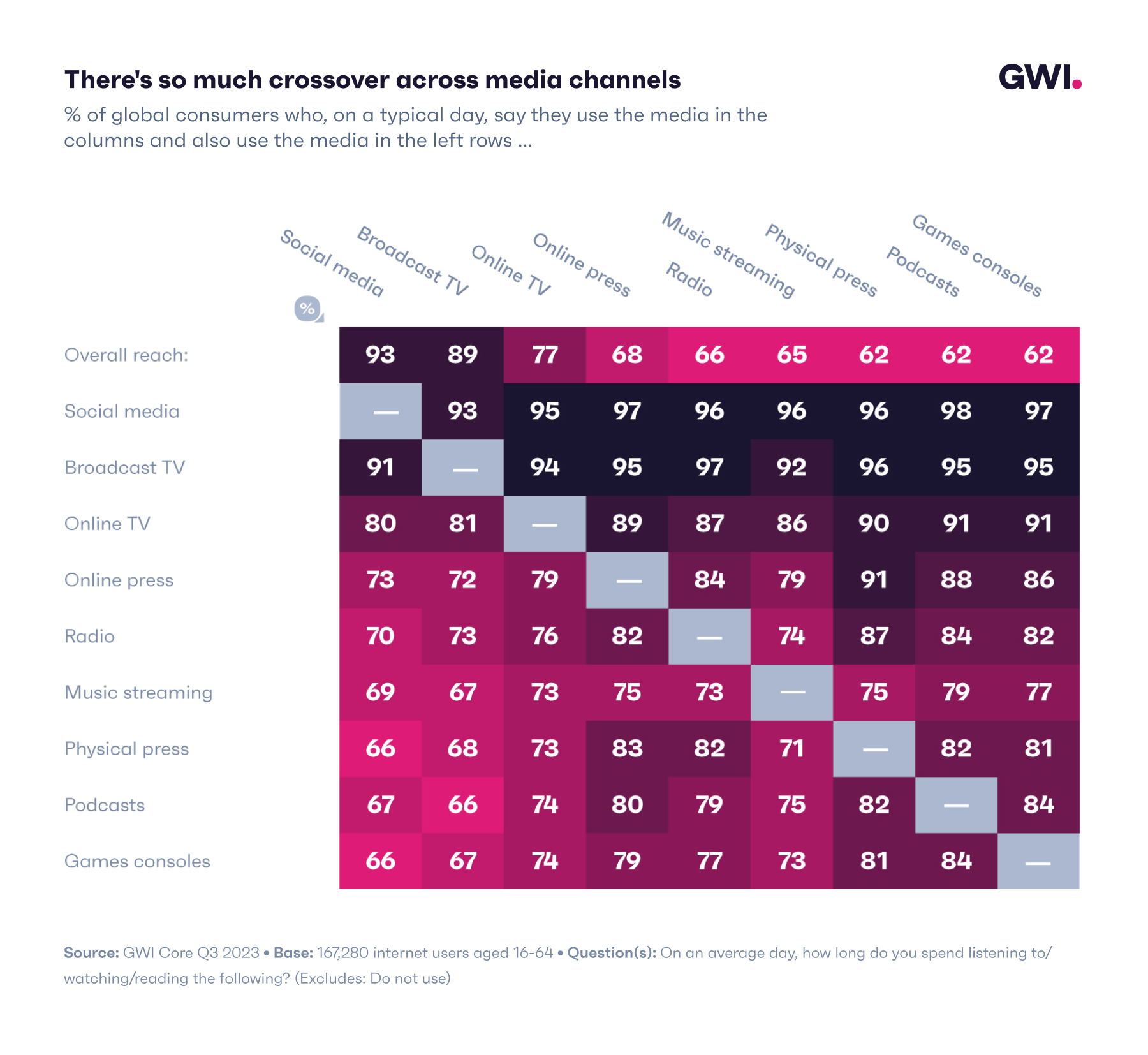
Fortunately, brands don’t need to be on every channel imaginable to get ahead, as most audiences can be found across the media spectrum. In fact, they all have fairly big reach and overlap.
Instead, marketers should aim to select a mix of platforms based on the specific things they want to achieve.
There's so much crossover across media channels
Overlap of media channel usage on a typical day
Source: GWI Core Q3 2023 | Base: 167,280 internet users aged 16-64
Getting on your audience’s radar
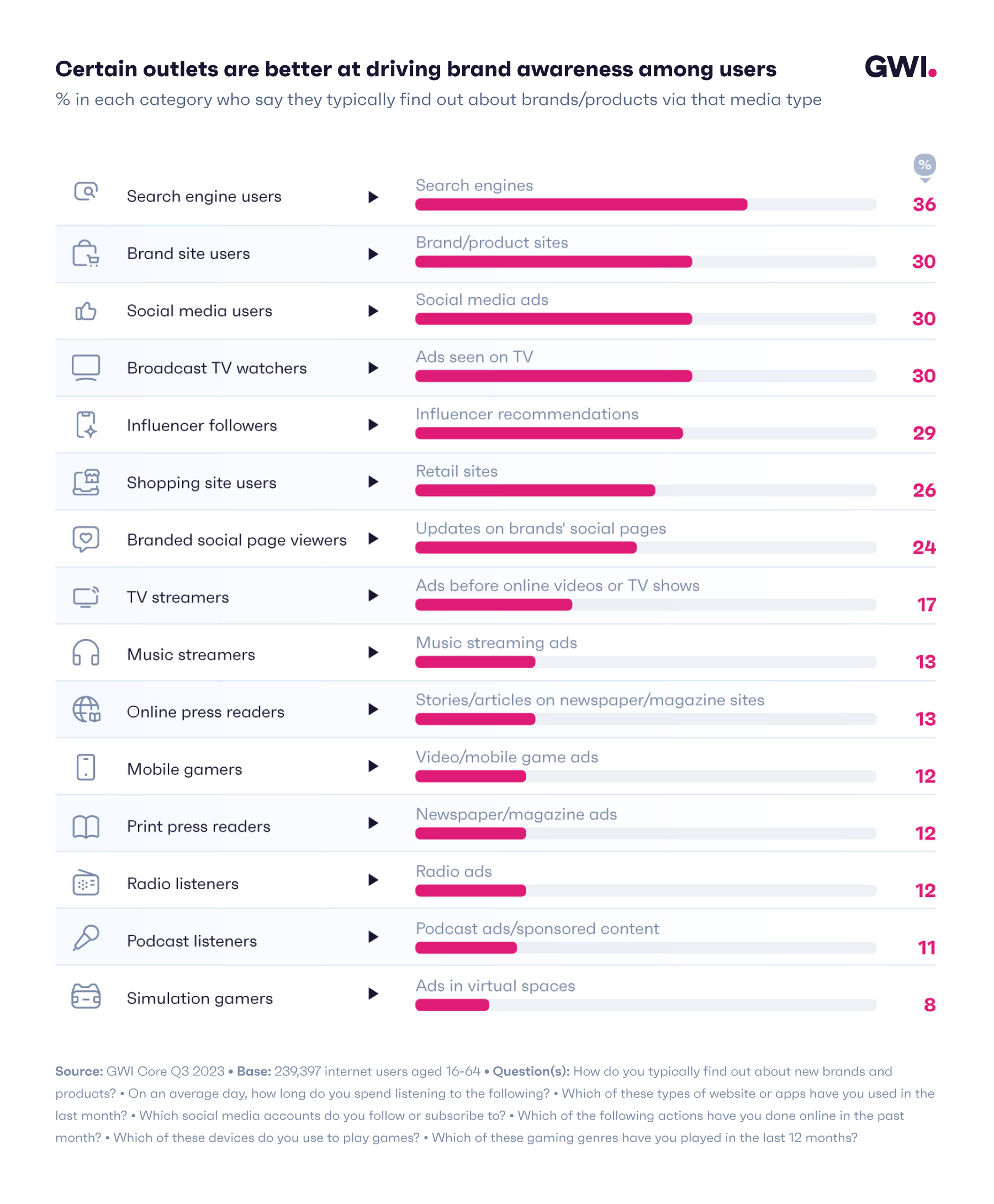
Let’s start with brand exposure. More than 1 in 4 workers responsible for marketing say that raising brand awareness is an important initiative to help drive growth in the next year. And it’s a goal that – unless you’re Coca-Cola – businesses are continuously working toward.
Certain outlets are better at driving brand awareness among users
% in each category who say they typically find out about brands/products via that media type
Source: GWI Core Q3 2023 | Base: 239,397 internet users aged 16-64
Moving from discovery to checkout
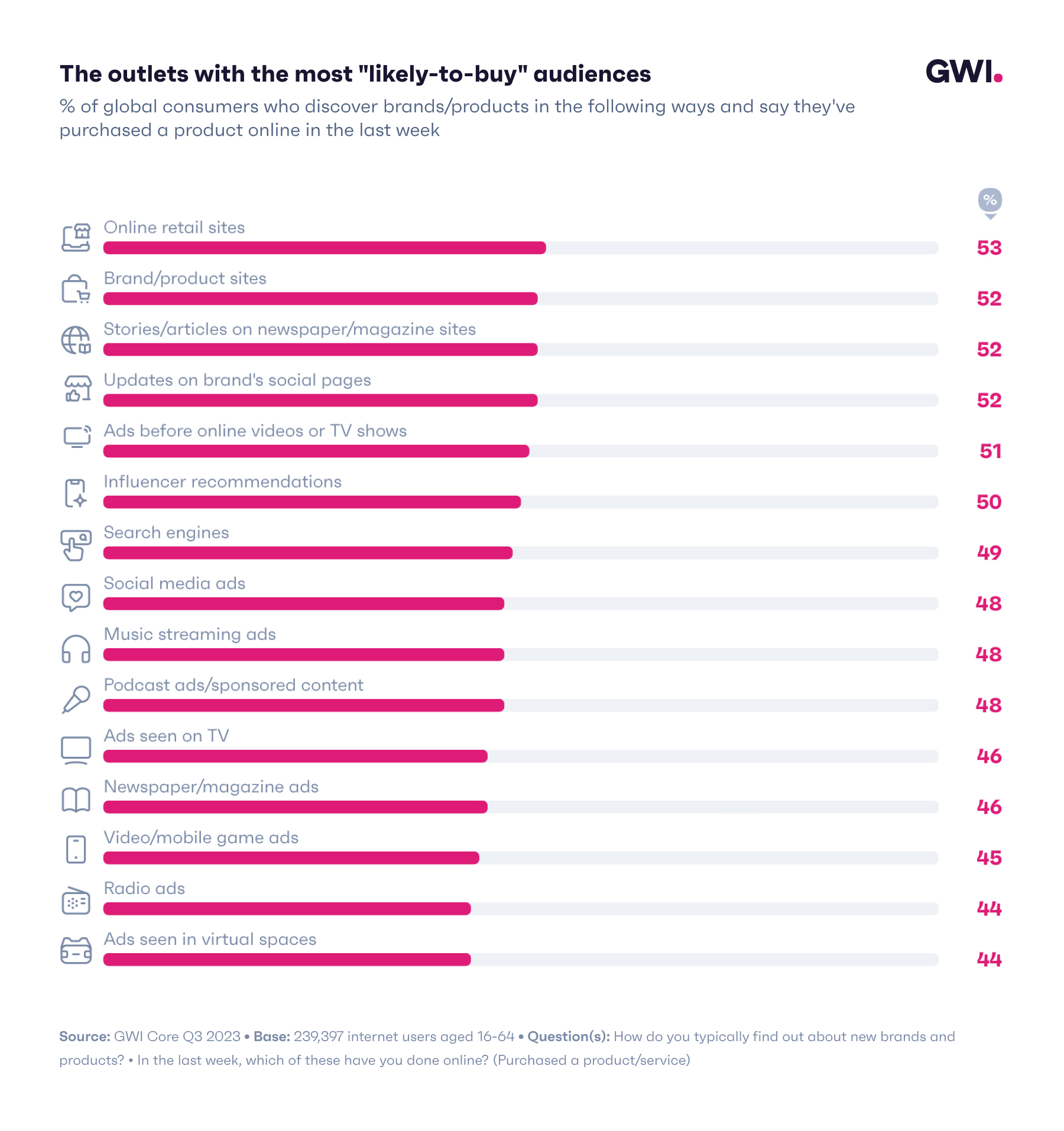
Our data can be used to suggest the best channels for conversion post-discovery too. If companies are focused on reaching groups that make the most online purchases, retail, brand, and product sites are the spaces to be. Consumers in retail spaces are eager for inspiration, creating an opportunity for brands to boost sales.
The outlets with the most "likely-to-buy" audiences
% of global consumers who discover brands/products in the following ways and say they've purchased a product online in the last week
Source: GWI Core Q3 2023 | Base: 239,397 internet users aged 16-64
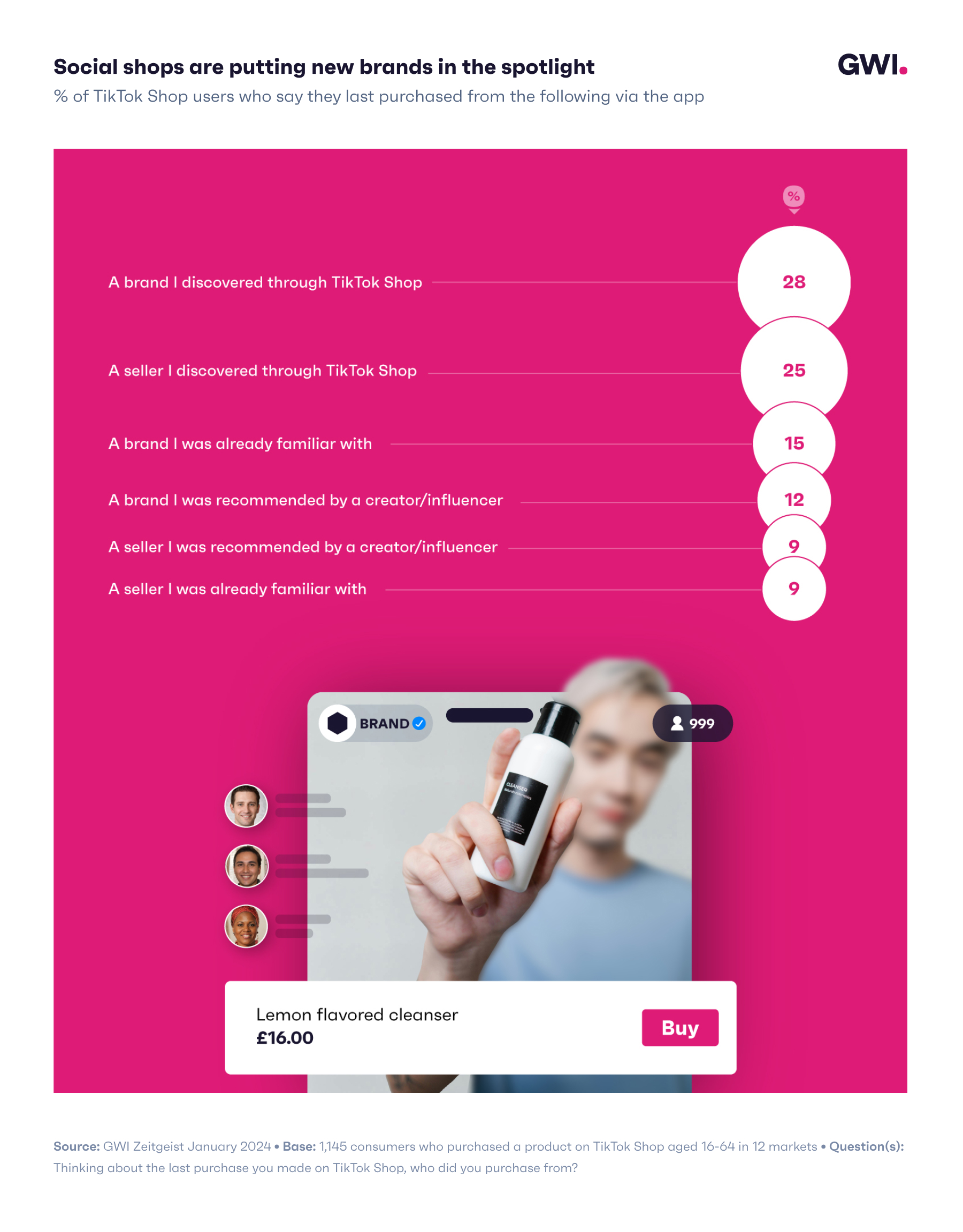
Smaller brands are making it big on TikTok Shop
Consumers who discover brands in commerce environments have the most buying intent, and various platforms are building these spaces within their walls. TikTok has made some of the biggest jumps in this area recently.
Social shops are putting new brands in the spotlight
% of TikTok Shop users who say they last purchased from the following via the app
Source: GWI Zeitgeist January 2024 | Base: 1,145 consumers who purchased a product on TikTok Shop aged 16-64 in 12 markets
Cutting through the noise with creative messaging
Consumers want more talk around discounts, and less around CSR
% of UK/US consumers who most want ads to do the following
Source: GWI Zeitgeist February 2021 & October 2023 | Base: 4,013 UK/US consumers aged 16-64 (2021) & 4,083 UK/US consumers aged 16-64 (2023)
Taking the pulse on podcast ads
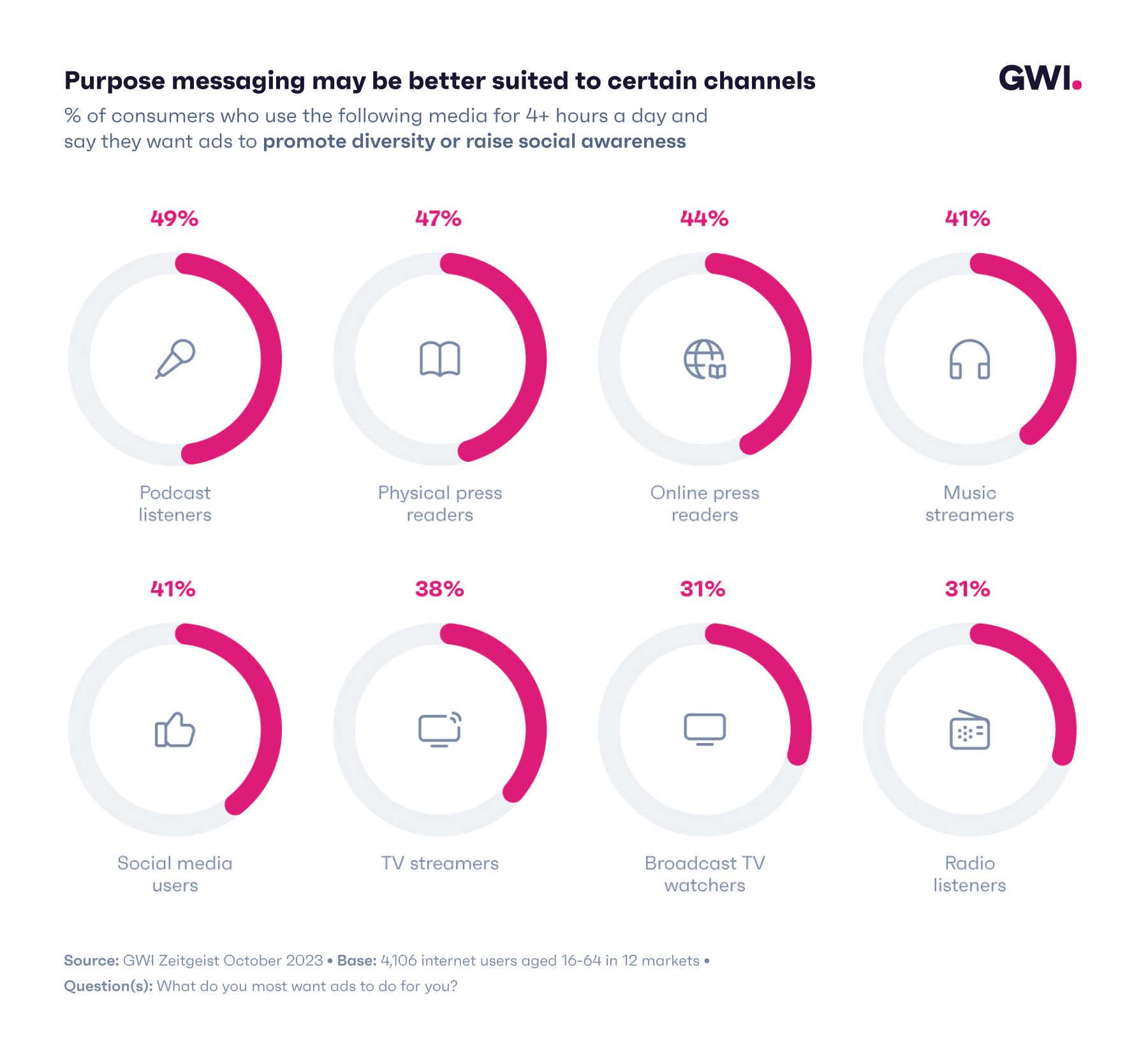
Purpose-driven messaging can also be deemed more or less appropriate depending on the media channel.
For instance, heavier podcast listeners are more receptive to ads promoting diversity and raising social awareness than their radio-listening counterparts. This can partly be explained by their attitudes and characteristics; they’re more likely to consider themselves opinion leaders, think immigration is good for their country, and say that contributing to their community is important to them.
Purpose messaging may be better suited to certain channels
% of consumers who use the following media for 4+ hours a day and say they want ads to promote diversity or raise social awareness
Source: GWI Zeitgeist October 2023 | Base: 4,106 internet users aged 16-64 in 12 markets
Knowing your audience starts with the industry you’re in
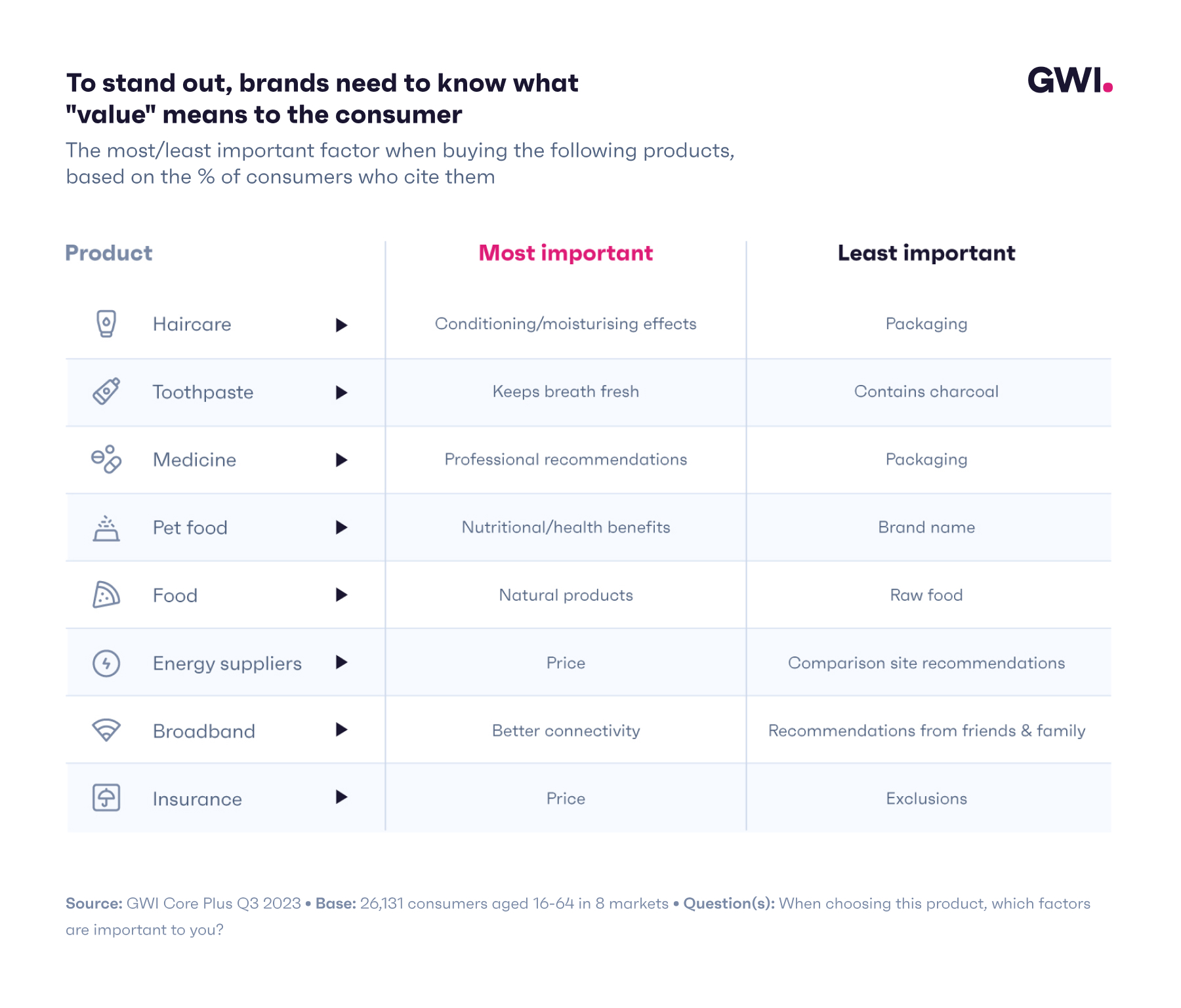
Another way brands can cut through the noise and tailor their messaging effectively is by understanding consumer priorities in their sector. It goes without saying that price is important during an economic downturn, and for some industries and brands, affordability needs to be in the limelight.
But quality also suggests value and drives loyalty. In 2019, North American and European consumers said rewards like discounts would most motivate them to promote a brand online. Fast forward to today, and high quality products are the top incentive.
To stand out, brands need to know what "value" means to the consumer
The most/least important factor when buying the following products, based on the % of consumers who cite them
Source: GWI Core Plus Q3 2023 | Base: 26,131 consumers aged 16-64 in 8 markets
Jokes that sell
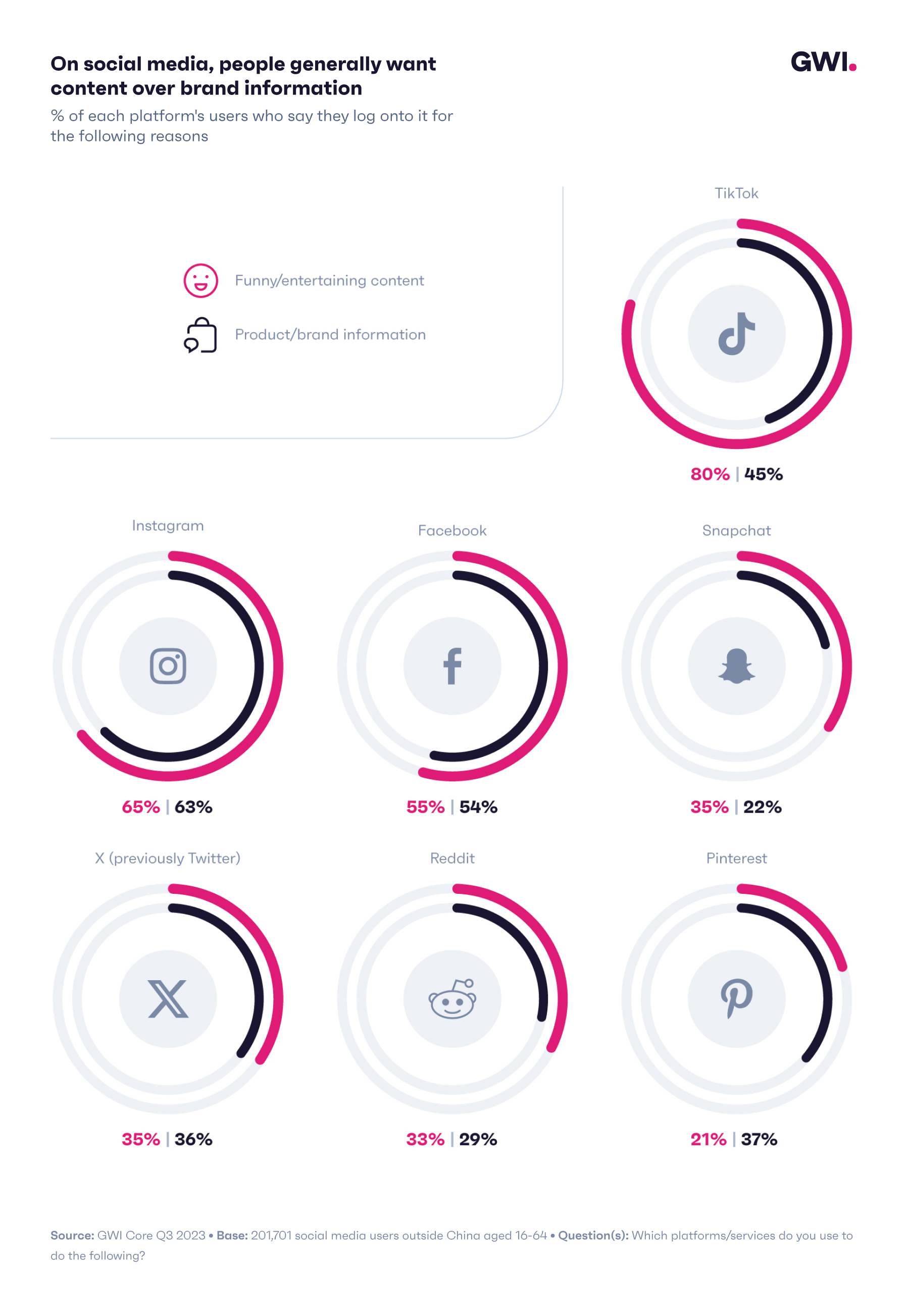
Entertaining marketing has also become more important. UberEats' Super Bowl ad, which features the Beckhams parodying their own Netflix documentary, is a great example of brands being light-hearted and culturally relevant.
On social media, people generally want content over brand information
% of each platform's users who say they log onto it for the following reasons
Source: GWI Core Q3 2023 | Base: 201,701 social media users outside China aged 16-64
Building brand trust and affinity online
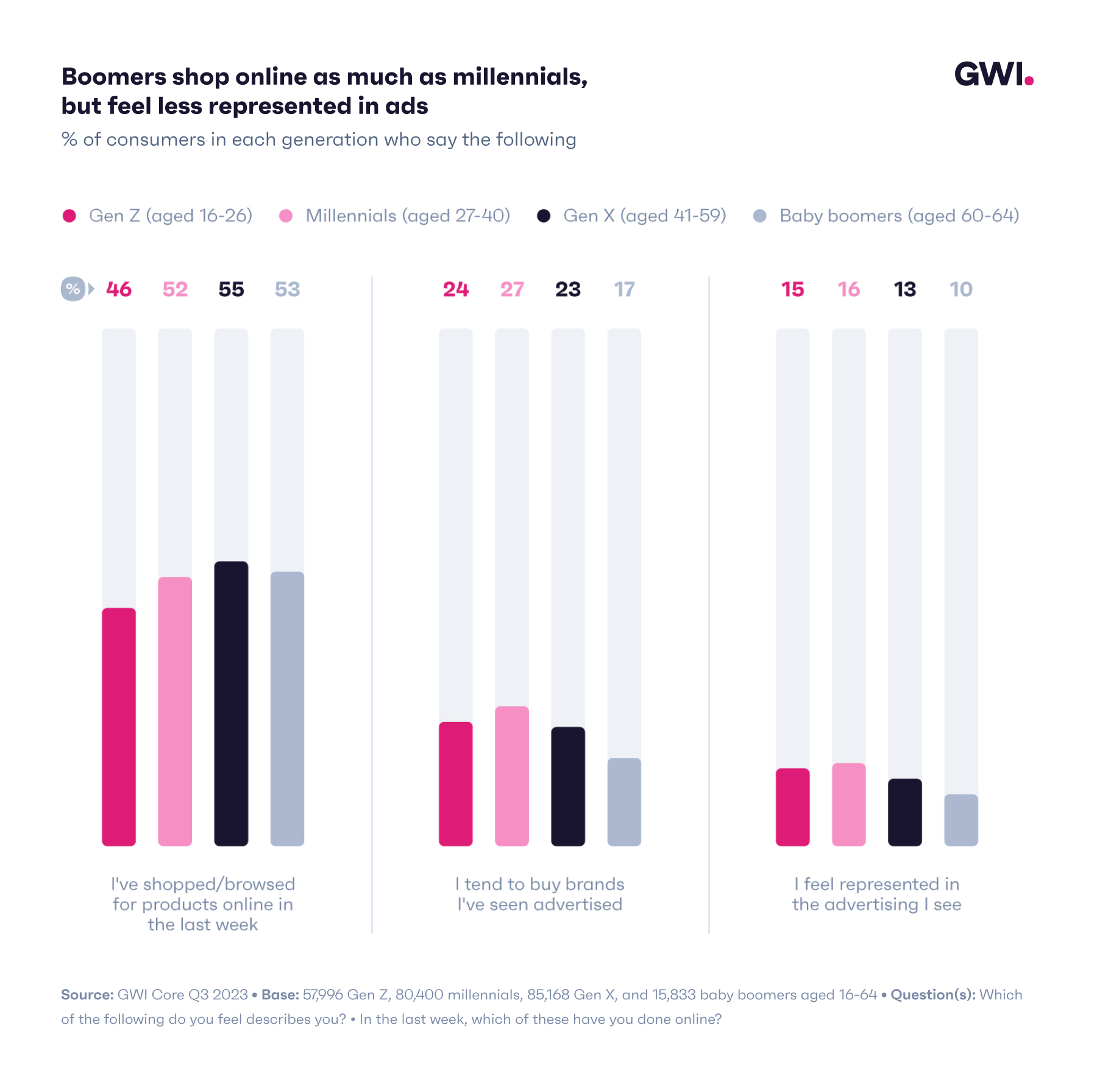
Boomers shop online as much as millennials, but feel less represented in ads
% of consumers in each generation who say the following
Source: GWI Core Q3 2023 | Base: 57,996 Gen Z, 80,400 millennials, 85,168 Gen X, and 15,833 baby boomers aged 16-64
Level up with LGBT+ consumers
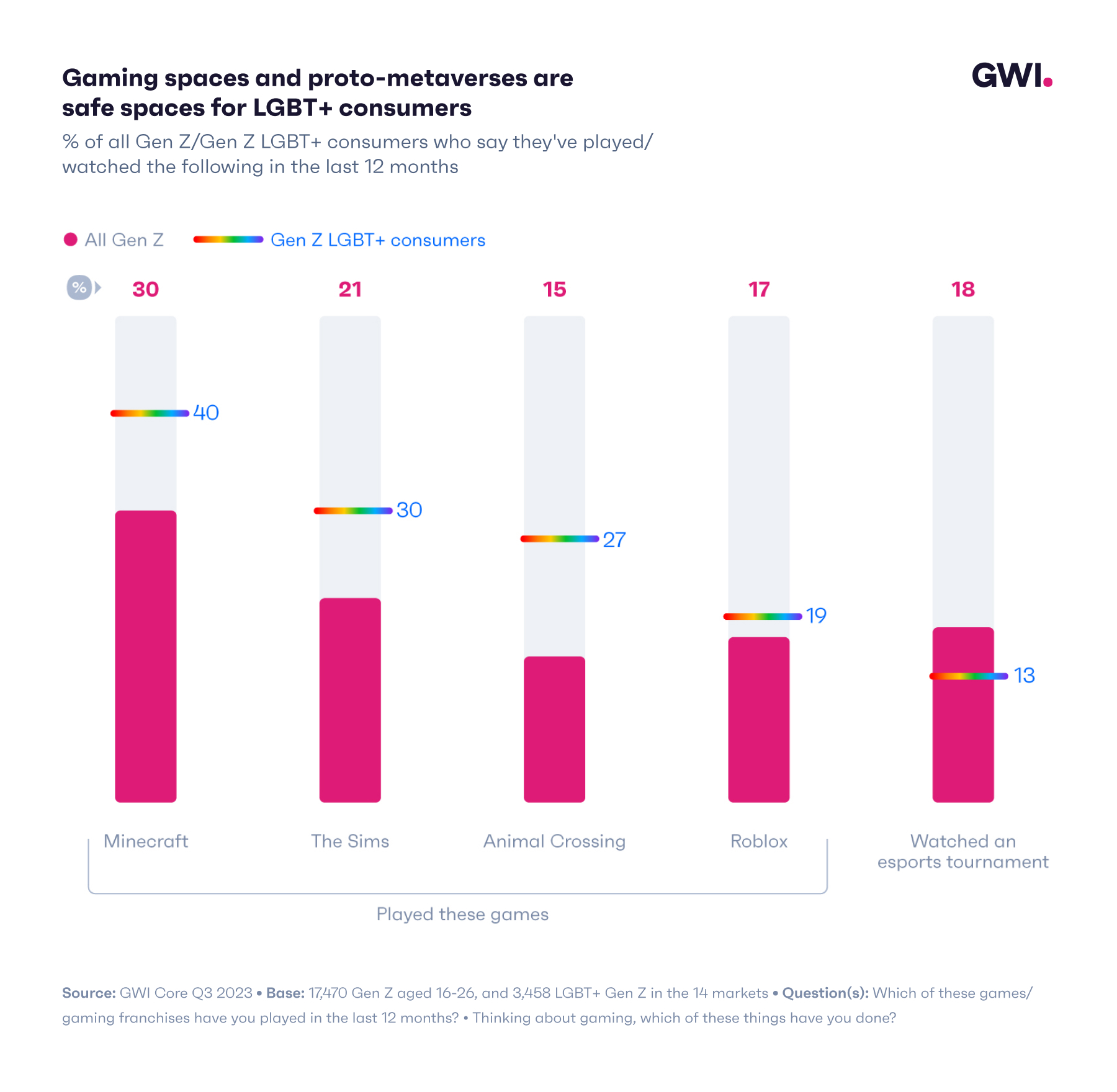
While the metaverse hype has died down, it's worth remembering that “proto-metaverses'' like Minecraft, Fortnite, and Roblox are still going strong; among these titles, regular engagement has grown by 28% since 2020. They’re great spaces for engaging with certain demographics too, namely LGBT+ consumers.
Gaming spaces and proto-metaverses are safe spaces for LGBT+ consumers
% of all Gen Z/Gen Z LGBT+ consumers who say they've played/watched the following in the last 12 months
Source: GWI Core Q3 2023 | Base: 17,470 Gen Z aged 16-26, and 3,458 LGBT+ Gen Z in the 14 markets
Influencer diversity demands attention
While there’s definitely been progress, minority groups are still underrepresented in many spaces and accustomed to seeking answers elsewhere.
People of color relate to influencers more than others
% of POC and other consumers in the UK, US, Australia, and Canada who say the following
Source: GWI Zeitgeist April 2023 | Base: 6,100 consumers and 1,212 people of color aged 16-64 in the UK, US, Australia, and Canada
Charting new territories with retail media
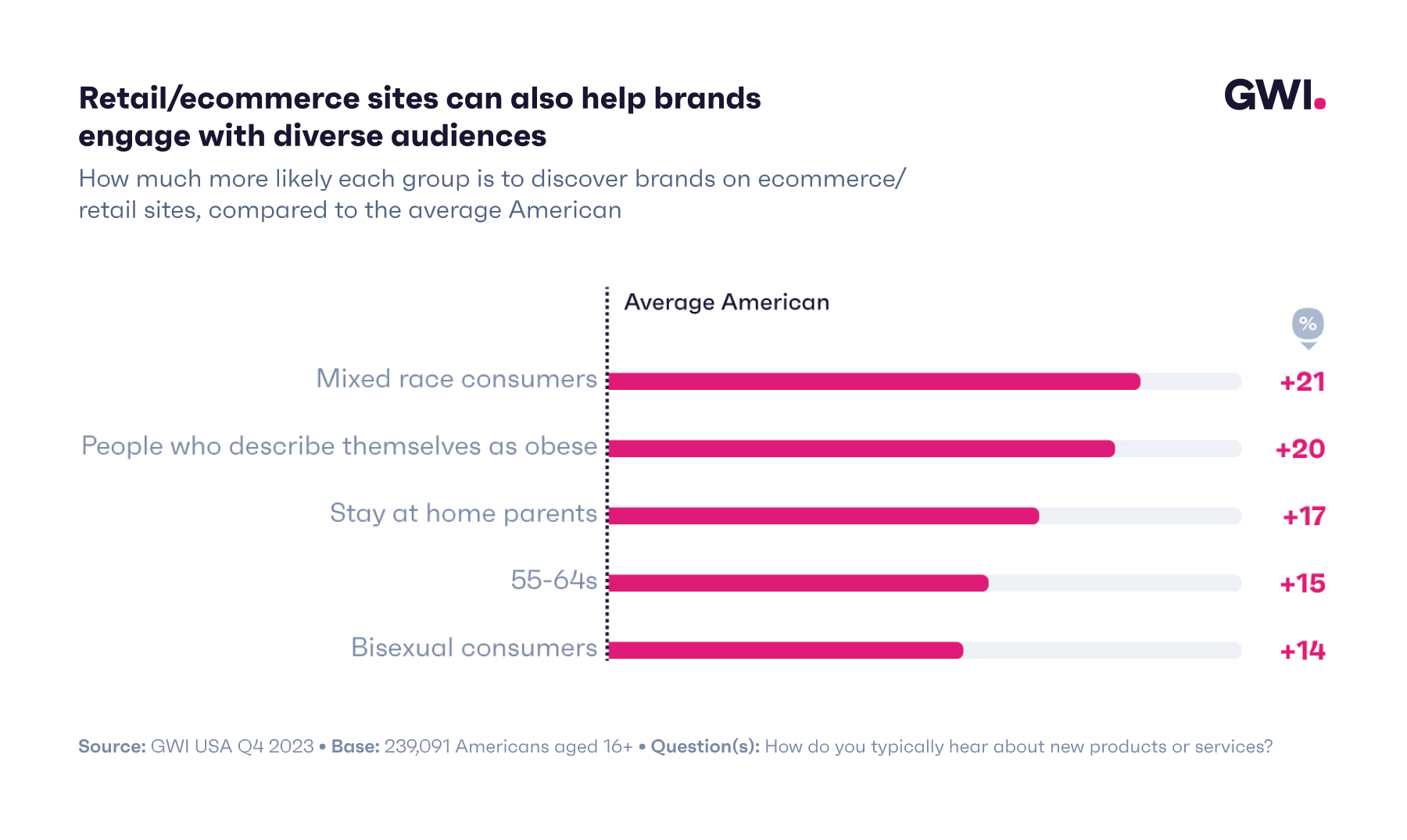
Finally, retail media networks have a lot of potential when it comes to connecting with diverse or underserved audiences.
Retail/ecommerce sites can also help brands engage with diverse audiences
How much more likely each group is to discover brands on ecommerce/retail sites, compared to the average American
Source: GWI USA Q4 2023 | Base: 239,091 Americans aged 16+
Uncovering new partners and opportunities
Identifying new opportunities is at the heart of most, if not all, key growth initiatives for marketing teams, be that offering better services to their customers, or boosting differentiation against competitors.
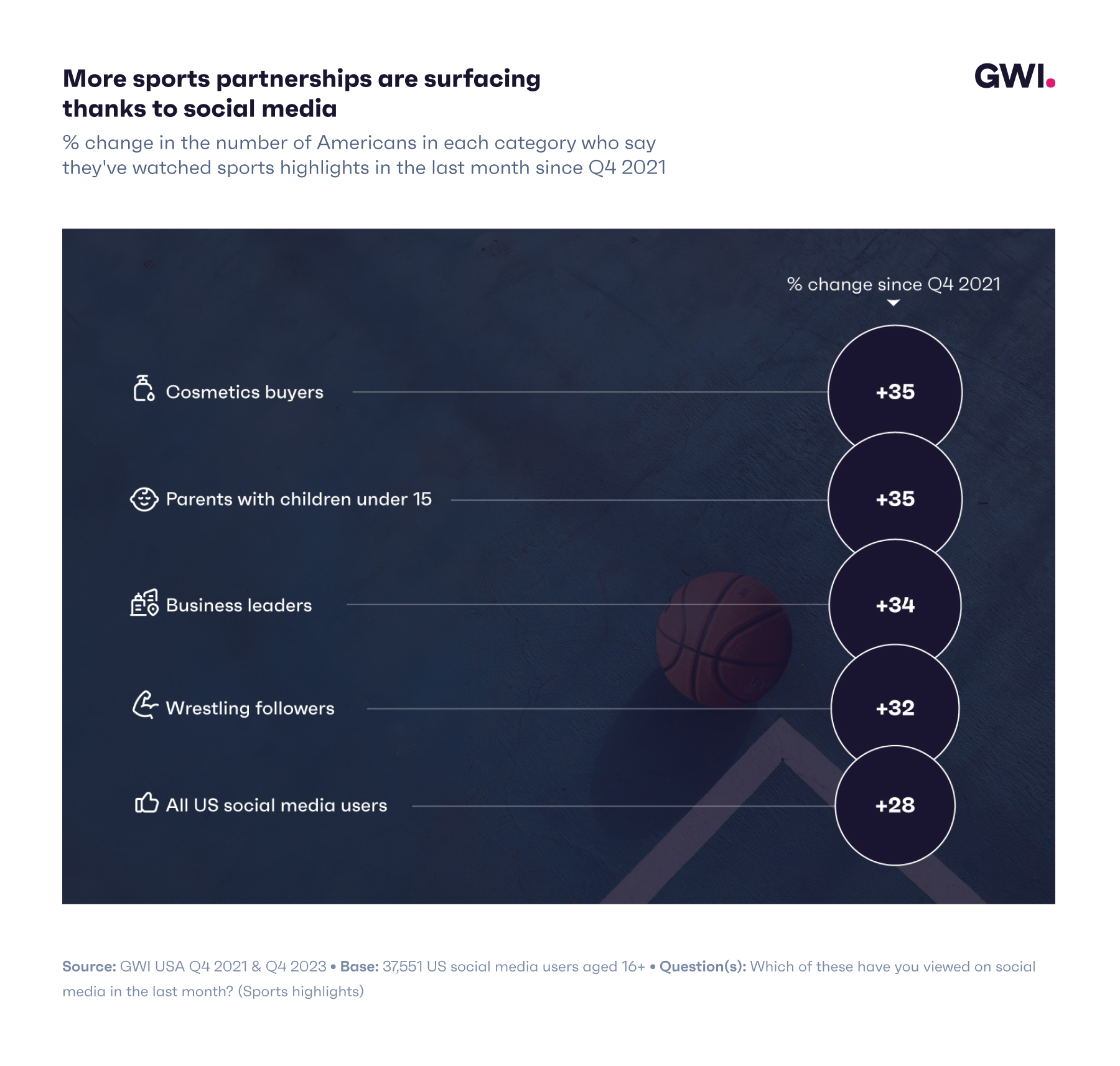
More sports partnerships are surfacing thanks to social media
% change in the number of Americans in each category who say they've watched sports highlights in the last month since Q4 2021
Source: GWI USA Q4 2021 & Q4 2023 | Base: 37,551 US social media users aged 16+
All these partnerships make sense. Consumers are increasingly watching sports on social platforms, especially combat sports. And these organizations are diversifying their fanbases as a result; MMA and boxing represent two of the three sports that have grown most in the US since 2020, and some of the audiences they’ve attracted are surprising too: groups like mascara wearers and Forever 21 shoppers.
There's definitely room for more of the leagues emerging on social media to collaborate with TV streamers. Over 1 in 5 consumers say that live sports events are important when streaming TV, and our data can be used to help sports companies find their audiences on OTT platforms. Amazon Prime users stand out most for following cricket and American football, for example, and Disney+’s audience for following skateboarding and ice hockey.
FAST streaming is coming in hot
While streaming sites are less established as a marketing channel, FAST models are likely to move the needle. Since Q4 2021, there’s been huge growth in Americans saying they watch FreeVee (+108%), Tubi (+68%), and Pluto TV (+32%) monthly.
More eyeballs means fresh opportunities for marketers, with 23% of FreeVee users saying they usually discover products through pre-show ads. Not only that, FAST platforms tend to have cheaper ad rates than traditional TV, more transparency on performance, and the potential for interactive ads – so we’re excited to watch this space develop.
Here’s a final reason we think it’s worth keeping an eye on FAST sites: brands can reach unique audiences through them.
US Pluto TV and Amazon FreeVee users are much more likely to use the internet to research healthcare, use financial investment tools, and engage with publishers like NBC News than the rest of the region. They’re just three examples of sectors that could benefit from exploring this space as a marketing channel.
Luxury has a home in horror games
Other opportunities worth looking into are gaming partnerships and in-game ads. There's a strong appetite for luxury gaming collaborations, especially within certain categories.
There's demand for luxury gaming collaborations
% of all gamers/those in each category who are interested in a luxury gaming collaboration
Source: GWI Luxury Q3 2023 | Base: 7,992 gamers aged 16-64 in 5 markets
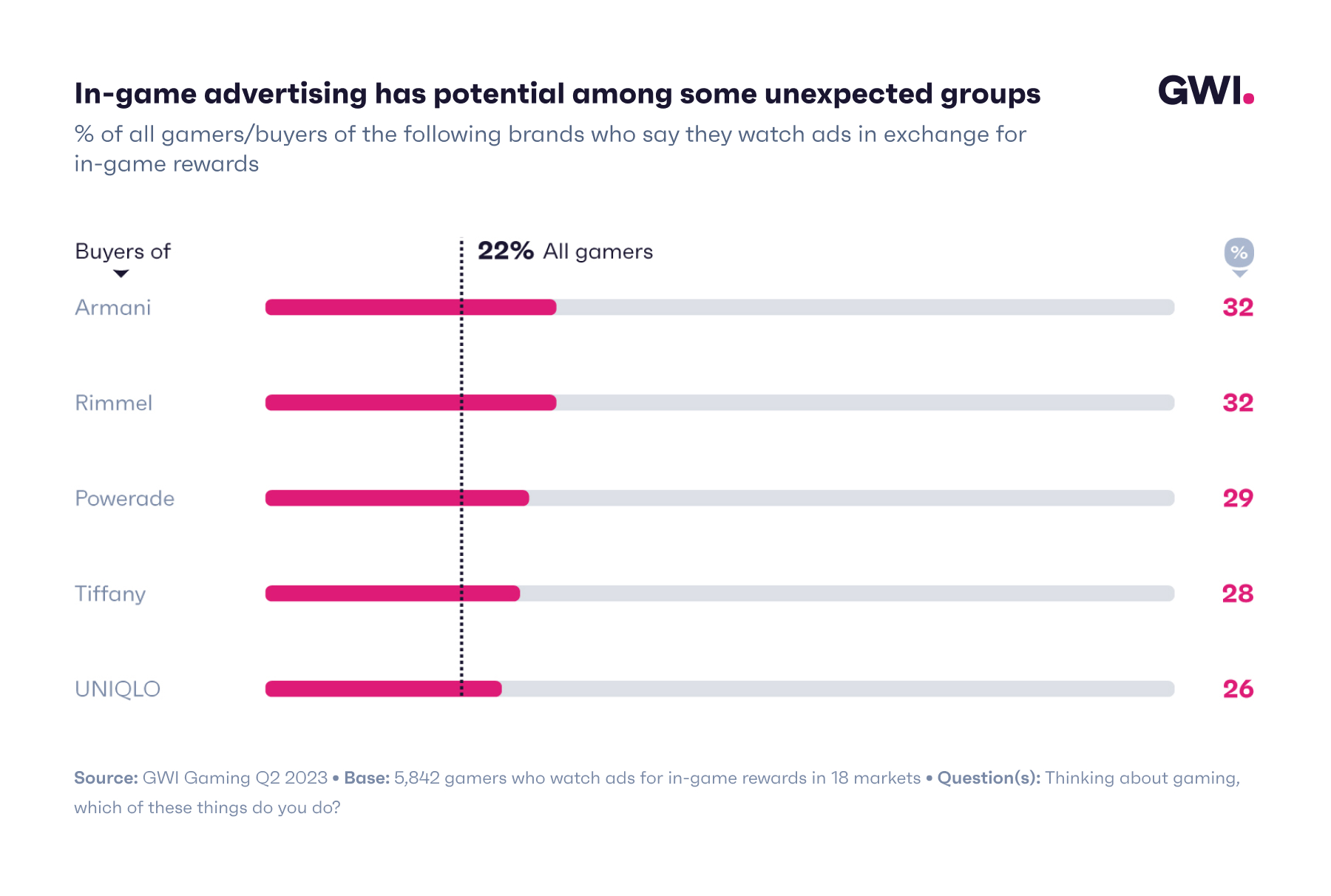
In-game advertising has potential among some unexpected groups
% of all gamers/buyers of the following brands who say they watch ads in exchange for in-game rewards
Source: GWI Gaming Q2 2023 | Base: 5,842 gamers who watch ads for in-game rewards in 18 markets
Marketing campaigns that don’t exist, but probably could. FIFA x Revlon: Level up your hair game
We’ve recently started experimenting more with our data, taking popular brands and seeing which segments of their audience lie outside usual stereotypes. We then feed it into ChatGPT and get a description of a hypothetical marketing campaign aimed at that group. Here’s one for you.
FIFA is the most played game globally, and its fans share certain characteristics. Your average adult FIFA player is a 33 year-old man who enjoys watching esports tournaments and follows a sports or gaming account on social media. He’s likely to play soccer; in fact, over half of UK FIFA gamers play it, compared to 18% of the general population. All this you might expect.
But one of his habits gets less attention: he devotes a lot of time and energy to his personal style. Compared to other Gen Z and millennials, FIFA players are 49% more likely to use hair coloring kits and 37% more likely to use Revlon products each week, inspired by the footballers who invest in standing out on the pitch. Brazil’s Neymar is reported to have flown his personal barber over 6,000km to Qatar for a pre-match trim.
Off the back of this, ChatGPT suggested that Revlon and FIFA develop a tutorial series together, which could be hosted on YouTube and promoted on FIFA players’ favorite social platform: Instagram. This would showcase soccer icons demonstrating their preferred looks and ways to achieve them, and encourage followers to share their own takes – basically, setting up another competition, and saying “game on”.

Get fresh insights weekly
Subscribe today